Two-thirds of Britain’s food came from across the ocean—and German U-boats were already sinking ships faster than they could be replaced.
With men leaving farms for battlefields, fields across the country fell silent.
Empty. Unworked. Dangerous.
So the government made a desperate decision.
They handed pitchforks to 80,000 women and said, “Save us.”
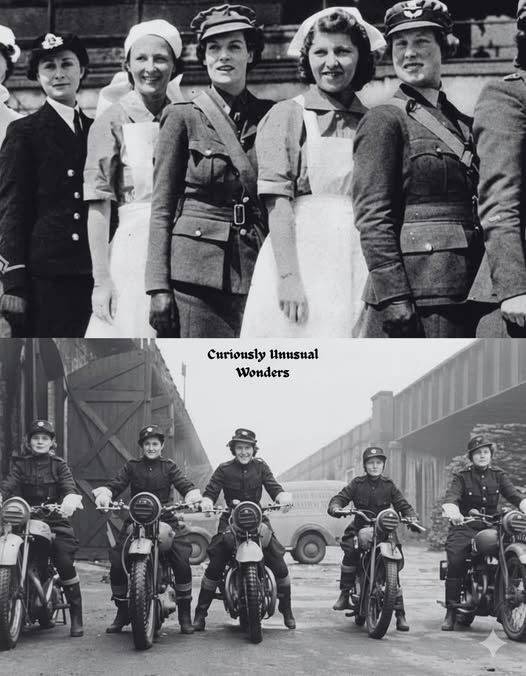
They arrived from every corner of the country—shop girls, secretaries, typists, teachers, hairdressers. Most had never touched a plough, never milked a cow, never worked outside the city. But they came anyway.
They traded lipstick for sunburn. City shoes for heavy boots. Warm rooms for cold, muddy fields.
They called themselves Land Girls.
At first, farmers didn’t believe they could do it. They eyed the young women stepping off trains with suitcases and soft hands and asked, “Can they really handle this?”
The Land Girls didn’t argue.
They worked.
They rose at 4 a.m. to milk cows with frozen fingers.
They ploughed fields until their palms split open.
They hauled hay bales bigger than their bodies.
They dug potatoes until their knees went numb.
They repaired tractors, shoveled manure, chopped timber, harvested wheat, and worked through sleet, heatwaves, and storms that soaked them to the bone.
There was nothing glamorous about it.
The cold cut through their uniforms in winter.
The sun scorched them breathless in summer.
At night, they collapsed in drafty hostels, too exhausted to wipe the dirt from their cheeks.
But every blister, every ache, every tear meant Britain had one more day of food.
Slowly, farmers’ doubts turned into respect.
“She’s stronger than she looks.”
“She doesn’t quit.”
And among themselves, the Land Girls formed a sisterhood—sharing letters, trading jokes, comforting each other through homesickness and heartbreak. Many were far from their families for the first time. But they stayed, because the country needed them.
Under Lady Gertrude Denman’s leadership, the Women’s Land Army grew to more than 80,000 women by 1944.
While U-boats prowled the waters and bombs shook the cities, these women worked in silence—feeding a nation one harvest at a time.
And when the war ended?
No parades. No medals. No grand speeches.
They were told to return their uniforms, go home, and fade back into ordinary life.
But home felt smaller now.
Because the women who returned weren’t the same girls who had left.
They had discovered strength.
Independence.
Worth.
For decades, their story went largely untold. But the truth lived on, written in every field they saved:
Eighty thousand women stood between Britain and starvation—and they won.
They didn’t fight with guns.
They fought with grit.
With courage.
With hands blistered from work people claimed was “too hard” for them.
Their service was quiet.
But their impact was everything.
The Land Girls didn’t just feed a nation.
They changed it.