In the desolate aftermath of Bergen-Belsen in April 1945, Esther, a survivor, found herself standing among the dead, surrounded by the ghosts of countless lives lost. The British troops were already at work burying the victims of the camp, but Esther’s heart could not rest. Amid the devastation, her eyes fell upon the body of an unknown child, and something stirred deep within her—a desire to give this child a small piece of dignity, a sliver of humanity in a place where both had been stripped away.
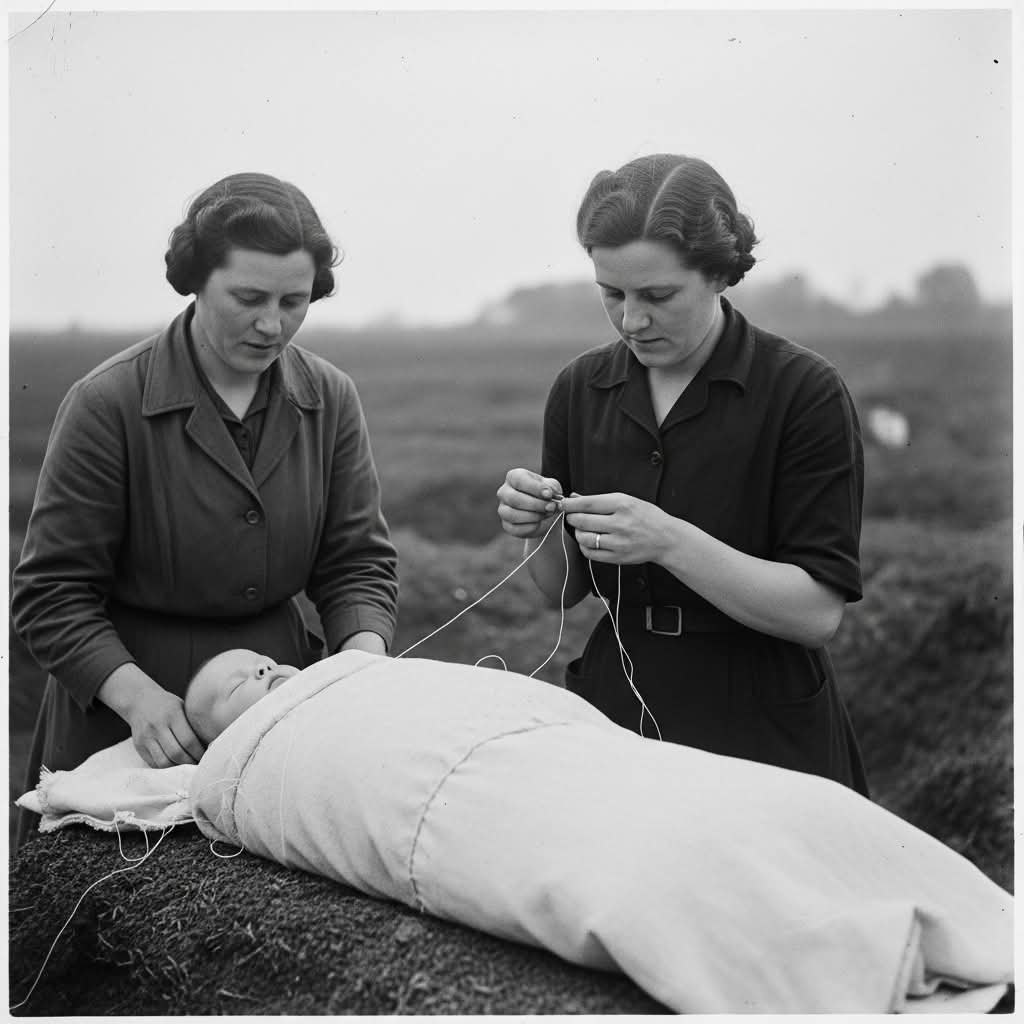
Esther asked if she could sew a shroud for the child. She had no needle, only thread made from torn rags, yet she insisted, “Let me do this one thing, so someone’s mother can rest.” It was a simple request, but it was everything. The thread she worked with was fragile, much like the spirit she was trying to revive. As she stitched, she whispered prayers in Yiddish, offering words of comfort that had once been lost in the screams and chaos of the camp.
When she finished the stitch, Esther fainted from exhaustion, her body unable to carry the weight of the past any longer. But that small act—the shrouding of a stranger’s child—became her first step back toward life. It was as if, in the simple act of giving care to another, she began to heal. The child would never know her name, but through Esther’s hands, the spirit of love and compassion persisted, proving that even in the darkest places, the smallest acts of kindness could restore what had been taken.