In the quest to keep our food fresh and extend its shelf life, the refrigerator often seems like a safe bet. However, not all foods benefit from being chilled. When it comes to certain breads and pastries, refrigeration can actually do more harm than good. The cool environment alters their texture and flavor, often rendering them inedible faster than if they were stored at room temperature.
Understanding the science behind bread and pastry storage can save you from culinary disappointment and food waste. While refrigeration is excellent for perishable items like dairy and meat, it’s not the ideal environment for all baked goods. This article explores ten types of breads and pastries that should remain unrefrigerated to preserve their quality and taste.
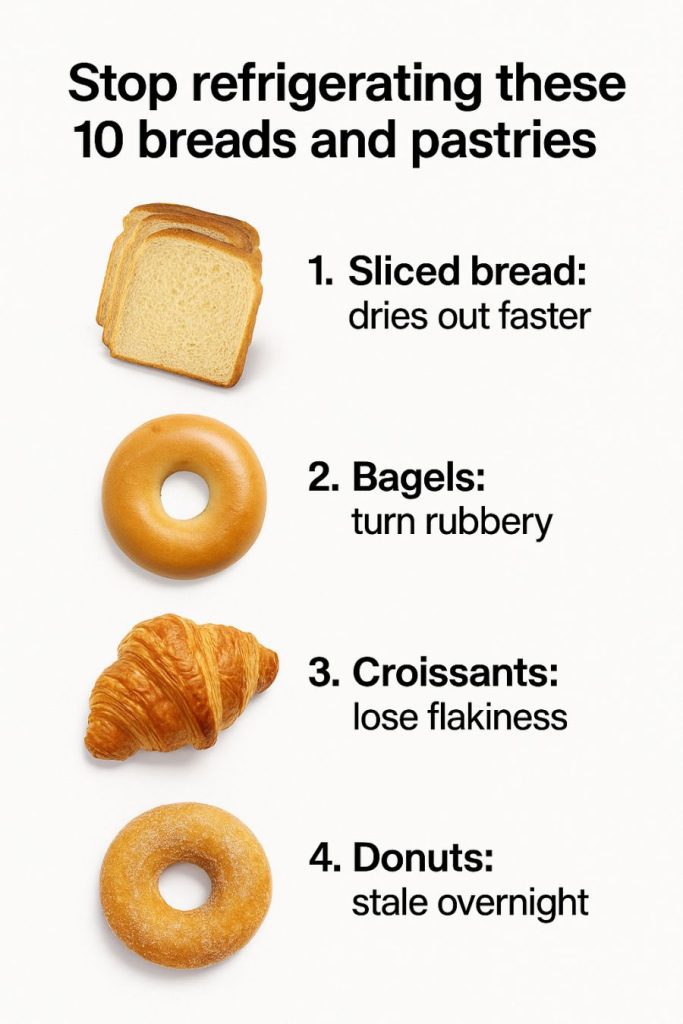
1. Sliced Bread: Dries Out Faster
Sliced bread might seem like a practical candidate for refrigeration, especially given its tendency to mold. However, the cool temperature of the fridge accelerates the staling process, causing it to dry out quickly. The reason lies in the process of starch retrogradation, where the starch molecules crystallize, leading to a hard and dry texture. Within just a day or two in the fridge, sliced bread can become noticeably stiffer and less enjoyable to eat.
To keep sliced bread fresh, consider storing it in a bread box or a sealed plastic bag at room temperature. If you’re worried about it going stale too quickly, freezing is a better option than refrigeration. Simply slice the loaf, wrap it in plastic, and freeze it. When you want a slice, just take it out and toast it directly from the freezer.
2. Bagels: Turn Rubbery
Bagels are beloved for their chewy texture, but refrigerating them can ruin this distinctive quality. In the fridge, bagels can become rubbery and tough, which is particularly disappointing given their normally deliciously dense crumb. The refrigeration process causes the moisture within the bagel to redistribute unevenly, affecting both flavor and texture.
The best way to store bagels is to keep them at room temperature in a paper bag, which allows them to breathe. If you need to store them for longer, freezing is an option. Just slice the bagels before freezing, and when ready to eat, thaw at room temperature or toast directly from frozen.
3. Croissants: Lose Flakiness
Croissants are prized for their flakiness, a result of layers of butter and dough. Unfortunately, refrigeration causes these delicate pastries to lose their characteristic texture. The cold temperature hardens the butter between layers, leading to a denser, less flaky pastry.
To preserve the integrity of croissants, store them in a paper bag at room temperature for up to two days. If you need to keep them longer, freezing is recommended. Wrap each croissant individually in foil or plastic wrap and then place them in a freezer bag. Reheat in an oven to restore some of their original flakiness.
4. Donuts: Stale Overnight
Donuts are another pastry that suffer in the fridge. The cold air speeds up the staling process, causing them to harden and lose their delightful softness overnight. The sugar glazes or coatings on donuts can also become sticky and unpleasant when refrigerated.
For best results, store donuts in an airtight container at room temperature. If you need to keep them for more than a couple of days, freezing is an option. Wrap each donut in plastic wrap and place them in a freezer-safe bag. To enjoy, let them thaw at room temperature or warm them briefly in the oven.
5. Muffins: Lose Moisture and Flavor
Muffins contain a good amount of moisture which makes them soft and tender. However, refrigeration causes them to rapidly lose moisture, making them dry and less flavorful. The cold air can also alter the taste by affecting the delicate balance of ingredients like fruit or chocolate chips.
To keep muffins fresh, store them in an airtight container at room temperature for up to three days. If you’re not planning to eat them within this time frame, freezing is a better option. Wrap each muffin individually in plastic wrap and place them in a resealable freezer bag. Thaw at room temperature or warm up in the microwave for a quick treat.
6. Baguettes: Harden Quickly
Baguettes have a short shelf life due to their crusty exterior and soft interior. Refrigeration accelerates the hardening process, making them tough and difficult to chew. The crust loses its crispness while the inside becomes dry and unappealing.
To enjoy baguettes at their best, consume them fresh on the day of purchase. If you have leftovers, store them in a paper bag at room temperature for up to a day. For longer storage, freezing is the best choice. Wrap the baguette in aluminum foil or plastic wrap and place it in a freezer bag. Reheat in an oven for a few minutes to restore some of its original texture.
7. Brioche: Becomes Dense
Brioche is a rich, buttery bread that relies on its soft, airy texture for appeal. Refrigerating brioche causes it to become dense and heavy as the cold air affects the butter and moisture content. Within just a day, the bread can lose its lightness and become unpleasantly chewy.
To keep brioche fresh, store it at room temperature in a bread box or sealed plastic bag. If you need to store it for longer than a couple of days, freezing is preferable. Slice the brioche, wrap it tightly, and store it in the freezer. Toast or warm slices to enjoy.
8. Cinnamon Rolls: Lose Their Softness
Cinnamon rolls are known for their soft, gooey centers and sweet glaze. Placing them in the refrigerator causes them to lose their softness and become dry and unappetizing. The cold temperature affects the dough’s moisture content and alters the texture of any icing or glaze.
Store cinnamon rolls in an airtight container at room temperature for up to two days to maintain their softness. For longer storage, freeze them by wrapping each roll individually and placing them in a freezer bag. Reheat in the oven to recreate the freshly baked taste.
9. Pita Bread: Becomes Tough
Pita bread, with its soft and flexible texture, can become tough and difficult to use when refrigerated. The cold temperature causes the moisture to escape quickly, resulting in a dry and brittle product.
For best results, store pita bread in a plastic bag at room temperature. If you need to keep it for an extended period, freezing is advisable. Wrap the pitas individually in plastic wrap and place them in a freezer bag. Thaw at room temperature or warm them in a skillet or oven for pliability.
10. Pastries with Cream Fillings: Separate and Soggy
Pastries with cream fillings, such as eclairs or cream puffs, do not fare well in the refrigerator. The cold temperature can cause the cream filling to separate, making it watery and less appealing. Additionally, the pastry shell can become soggy as it absorbs moisture from the filling.
For optimal texture and flavor, these pastries are best consumed fresh. If you must store them, keep them in an airtight container in a cool, dry place for no more than a day. Freezing is generally not recommended as it can alter the texture of the cream filling.
11. Artisan Loaves: Flavor and Texture Deteriorate
Artisan loaves, characterized by their thick crusts and complex flavors, can lose both flavor and texture when refrigerated. The cold air causes the crust to become chewy rather than crisp, while the crumb inside dries out quickly.