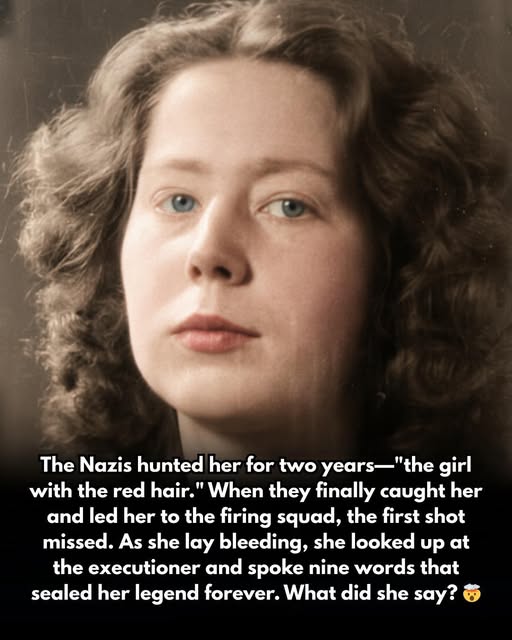
April 17, 1945. The dunes near Haarlem, Netherlands.
The war was nearly over—liberation was just three weeks away. But Hannie Schaft, just 24 years old, was facing a firing squad.
For two long years, the German Gestapo had been hunting her: “the girl with the red hair,” the most wanted resistance fighter in the Netherlands. They had finally caught her, but Hannie was about to show her executioner why they should have been far more afraid of her when she was alive.
A Choice Against Conformity
In 1940, Hannie was a brilliant 20-year-old law student in Amsterdam. When the Nazis occupied the Netherlands, she couldn’t simply keep her head down. She started small: stealing identity cards to help her two best friends, who were Jewish sisters, escape persecution.
Then came the loyalty oath: The Nazis ordered all Dutch students to sign or be expelled. Most signed, terrified of losing their education. Hannie refused. She walked away from her law degree and her future, deciding that if she couldn’t fight them with law, she would fight them with force.
The Deadliest Woman in the Resistance
In 1943, Hannie joined the Council of Resistance. She dyed her distinctive red hair black and wore thick glasses, trading her textbooks for lethal missions. She carried messages, smuggled weapons, and committed sabotage.
But her most dangerous work was assassination.
Hannie accepted missions most men refused. She would approach Dutch collaborators and Nazi officers—people actively hunting resistance fighters—and eliminate them. She was young, female, and slight. No one suspected her until it was too late.
Working alongside the famous teenage sisters, Truus and Freddie Oversteegen, they became known as “the girls of Haarlem”—using their unassuming appearance as camouflage. Hannie killed at least 20 Nazis and collaborators. The Gestapo, humiliated by a young woman, put a massive bounty on the head of “the girl with the red hair.” She became a national legend in the shadows.
The Final Defiance
In March 1945, Hannie was stopped at a routine checkpoint while transporting illegal newspapers. This time, the German soldiers searched carefully. They arrested her. During interrogation, they realized the shocking truth: they had captured their most wanted enemy.
Three weeks before liberation, the Nazis took Hannie to the execution site in the dunes. She refused a blindfold.
The executioner fired the first shot. It wasn’t fatal. She fell, bleeding, but conscious.
The Nazi stood over her, preparing to fire again. Hannie Schaft, 24 years old, used her last breath for a final, magnificent act of defiance. She looked up at the man and said:
“I shoot better than you.”
The executioner fired again, and she died.
The Red Hair Returns
Three weeks later, the Netherlands was free. When investigators exhumed the unmarked grave, the hair Hannie had dyed black to survive had grown out. In death, her glorious red hair had returned. They knew instantly who she was.
Hannie Schaft received a state funeral and is remembered today as one of the Netherlands’ greatest heroes. Streets, schools, and even a naval ship bear her name.
Hannie’s last words weren’t just an insult; they were the truth she had spent two years proving. Even when defeated, she made sure her executioner knew that the girl he killed was better than him.
She never finished her law degree. But she showed the world that courage is the only law that truly matters.