Joseph was born on May 26, 1886, in Cap-Haitien, Haiti, into wealth and privilege. His family was influential—his uncle, Cincinnatus Leconte, would become President of Haiti. Joseph grew up surrounded by opportunity, educated by private tutors, fluent in French, English, and Creole.
At fifteen, he traveled to Beauvais, France, with dreams of becoming an engineer. He studied hard, excelled in his classes, and in 1907 earned his engineering degree. His future looked brilliant.
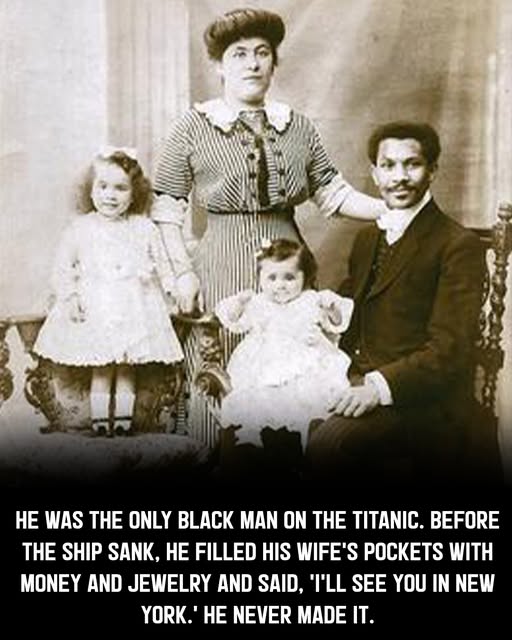
Then he met Juliette Lafargue, the daughter of a Paris wine merchant. They fell in love. They married in March 1908, and together they had two daughters—Simonne, born in 1909, and Louise, born premature in 1910 with ongoing health problems that required expensive medical care.
Joseph had everything he needed to succeed: education, talent, ambition, a growing family he adored. Everything except one thing he couldn’t change: the color of his skin.
This was early 1900s France, and racial discrimination was rampant. Despite his qualifications, Joseph couldn’t find work that matched his engineering degree. When he did get jobs, racist employers paid him far less than white engineers with identical credentials. He watched less-qualified white men advance while he struggled to support his family, to pay Louise’s mounting medical bills.
He was tired of living off his father-in-law’s charity. Tired of France’s refusal to see him as anything more than his race. So Joseph made a decision: he would take his family home to Haiti, where his uncle had promised him a professorship in mathematics, where his education and abilities would be valued, where his daughters could grow up without the weight of French racism crushing their futures.
In early 1912, Juliette discovered she was pregnant with their third child. Joseph wanted the baby born in Haiti, so he moved their departure up. His mother, excited to have her son returning home, purchased first-class tickets for the family on the ocean liner La France as a welcome gift.
But when Joseph and Juliette learned about the ship’s policy—that children had to stay in the nursery and couldn’t dine with their parents in first class—Joseph refused. Louise was often sick. Simonne was only three. The idea of separating his daughters from their mother on a long ocean voyage was unacceptable.
So they exchanged their first-class tickets on La France for second-class tickets on a brand-new ship that everyone was talking about: the RMS Titanic.
On April 10, 1912, the Laroche family boarded the Titanic at Cherbourg, France. Joseph carried three-year-old Simonne. Juliette held twenty-one-month-old Louise, fragile and small. They settled into their second-class cabin, and Juliette wrote home praising the ship’s elegance and the kindness of fellow passengers.
Some passengers stared at the interracial family. Some made rude comments. The White Star Line would later issue a public apology for the racism Joseph and his family faced from crew members during their brief time aboard.
But for four days, the Laroches enjoyed the voyage. They dined together in the second-class dining room—exactly what Joseph had wanted. They explored the ship. They imagined their new life in Haiti, where Joseph wouldn’t have to fight for respect, where his daughters could grow up seeing their father valued for his mind and his work.
Then, at 11:40 p.m. on April 14, 1912, the Titanic struck an iceberg.
Joseph woke Juliette and told her the ship had been in an accident. Juliette spoke no English, so she relied entirely on Joseph to understand what was happening. He dressed the girls quickly. He told Juliette to put on warm clothes.
Then he led his pregnant wife and two small daughters up to the boat deck.
Chaos surrounded them. Lifeboats were being lowered. The “women and children first” order was being enforced. Joseph knew what that meant: he wouldn’t be getting on a lifeboat. Not as a man. Certainly not as a Black man in a crisis where even white men were being turned away.
He had minutes to say goodbye to his family.
Joseph stuffed Juliette’s coat pockets with money and jewelry—everything valuable he had on him. She would need it to survive, to care for the girls, to raise the baby she was carrying.
He made sure Juliette and Simonne got into a lifeboat. Then he rushed to place Louise—tiny, fragile Louise with her health problems—safely in her mother’s arms.
Before the lifeboat was lowered, Joseph looked at his wife one last time.
“Here, take this,” he said, gesturing to the coat heavy with money and jewels. “You’re going to need it. I’ll get another boat. God be with you. I’ll see you in New York.”
Juliette watched as the lifeboat descended toward the freezing Atlantic. She watched as her husband stood on the tilting deck of the doomed ship. She never saw him again.
Joseph Philippe Lemercier Laroche died when the Titanic sank in the early hours of April 15, 1912. He was twenty-five years old. His body was never recovered from the ocean.
Juliette and her daughters were rescued by the RMS Carpathia and arrived in New York on April 18. But there was no one to meet them. No family in America. No reason to continue to Haiti without Joseph.
So Juliette took her daughters and returned to France, to Villejuif, to her family. On December 17, 1912—eight months after her husband died in the freezing Atlantic—she gave birth to a son.
She named him Joseph.
Traumatized by the disaster and the loss of her husband, Juliette rarely spoke about the Titanic. She instructed her children never to discuss it. The story of Joseph Laroche—the only Black man aboard the most famous ship in history—was buried in silence.
For decades, when people talked about the Titanic, they told stories of wealthy first-class passengers, of the ship’s band, of the heroism of certain men. But they didn’t mention Joseph Laroche. Many survivors never even acknowledged that a Black man and his family had been aboard.
His story was forgotten. Erased. Lost to history.
It wasn’t until the 1990s, when one of Joseph’s descendants stumbled across a photograph of him in a magazine and began researching, that the full story emerged. Historians started piecing together the truth: Joseph Laroche had been there. He had been a passenger. He had been a husband and father who sacrificed his life so his family could survive.
Louise Laroche, the fragile baby girl Joseph placed in her mother’s arms that terrible night, lived to be eighty-seven years old. She became one of the last living Titanic survivors. In 1995, she stepped aboard the SS Nomadic—the tender ship that had carried her family to the Titanic in 1912—for the first time since that April night.
She never forgot her father, the man she never got to know, the engineer who couldn’t find work in France because of racism, who was taking his family home to Haiti for a better life, who spent his final moments making sure she and her sister were safe.
Joseph Laroche’s story challenges everything we thought we knew about the Titanic. It forces us to confront the uncomfortable truth that even in tragedy, even in history’s most documented disaster, Black lives were erased from the narrative.
Joseph Philippe Lemercier Laroche deserved better. He deserved to find work worthy of his education. He deserved to raise his children in Haiti, to meet the son who was named after him. He deserved to grow old with Juliette.
Instead, he got a few minutes to say goodbye, a sinking ship, and a century of silence.
But now we know his name. Now we remember. The only Black man aboard the Titanic was a husband, a father, an engineer, a man who loved his family more than his own life.
He said he’d see them in New York.
He never made it.
But his story finally has.