She was born into a world of iron bars and cold stone walls. Her mother, a woman whose name was whispered with pity and judgment, had been a prisoner in the notorious Pennington Prison. She wasn’t the kind of woman who had the luxury of soft moments, of gentle care. Her life had been filled with choices that had led her here, to this dark and oppressive place.
The day she gave birth to her daughter was no different from any other day in the prison. It was hard, cruel, and suffocating. The labor was long and painful, and though she pleaded for help, the guards were indifferent. The doctors, when they arrived, were too late. Her mother died hours after her birth, leaving her daughter alone in the world, a tiny, helpless baby surrounded by nothing but the walls of a prison and the echoes of her mother’s final breath.
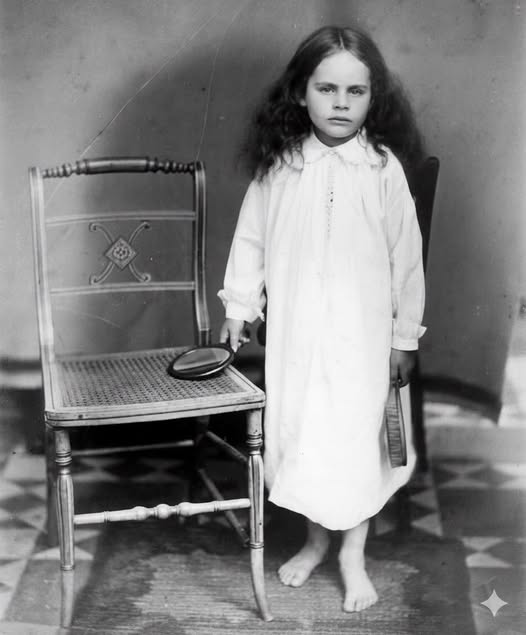
Her name was Isabel, though she hadn’t been named at birth. No one had bothered. She was simply “the baby,” an orphan whose existence was an accident in the cold, harsh machinery of a prison that had no use for the innocent. The warden wasn’t sure what to do with her. There were plenty of prisoners like her mother—lost souls who had thrown their lives away. But Isabel? She was different. She wasn’t born into crime. She was born into a world of suffering she hadn’t yet earned.
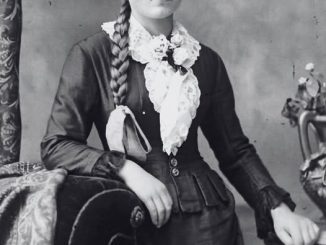
The lady jailer, Mrs. Clarabelle Fields, had watched the events unfold from a distance. Mrs. Fields wasn’t like the others in the prison. She wasn’t hardened by the same bitterness, the same cruelty. She had once been a young girl with a dream of becoming a teacher. She had become a jailer after circumstances had forced her hand, but she had never lost her compassion.
When the news of Isabel’s birth and her mother’s death reached her, Mrs. Fields didn’t hesitate. The decision wasn’t easy, but something inside her stirred. There was a quiet resolve in her heart—she couldn’t leave this child to the fate of the prison. So, with the warden’s reluctant approval, Mrs. Fields took Isabel under her wing.
Isabel’s new life wasn’t one of luxury, but it was one filled with care. Mrs. Fields, despite the demands of her position, made sure the child was raised with a sense of dignity. Isabel was given her first name, her first blanket, her first real smile. And although she was still within the confines of Pennington Prison, the walls that had once seemed so oppressive began to feel a little less suffocating. Mrs. Fields taught her how to read and write, how to hold herself with pride, how to see the world beyond the bars.
But it wasn’t all easy. Isabel grew up knowing that the world outside the prison walls would never see her as anything but a prisoner’s daughter. Children at the nearby school, when she was allowed to leave the prison grounds for lessons, would whisper behind her back, calling her “the jailbird’s daughter.” They made fun of her ragged clothes, her unpolished shoes, her strange, lonely existence. The feeling of being an outsider, different from the others, never quite left her.
But she had Mrs. Fields, who was more of a mother than Isabel could have ever hoped for. Mrs. Fields taught her the value of kindness, of hard work, of looking beyond the surface to see the truth in people. She showed her how to rise above the scars of her past, even when the world tried to remind her of it at every turn.
As Isabel grew older, she began to understand the gravity of her mother’s life and death. She learned of the choices her mother had made, of the crimes she had committed that had brought her to prison, and of the shattered life she had left behind. The truth didn’t scare Isabel; it only strengthened her resolve. She wasn’t her mother. She wouldn’t be defined by her mother’s mistakes. She would create her own path, one that wasn’t tangled in crime, one that would lead her far beyond the prison walls.
When Isabel turned eighteen, Mrs. Fields knew the time had come for her to leave the only home she had ever known. The world outside was big and uncertain, but Isabel was no longer a scared little girl. She was a young woman with the wisdom of a mother who had loved her, and the strength to forge a life of her own.
Mrs. Fields gave Isabel her last piece of advice before she left the prison gates: “The world won’t always see you for who you are, Isabel. But you see yourself. Never let anyone define you. You are more than where you came from.”
Isabel took those words to heart as she stepped out of the prison, the gates closing behind her with a finality she hadn’t fully understood until that moment. She was no longer “the prisoner’s daughter.” She was Isabel Fields, a young woman ready to make her own way in a world that had never been kind to her.
She started small—working odd jobs, saving every penny, and renting a small apartment in a quiet part of town. There were still whispers, still people who remembered her mother and made assumptions about who she must be. But Isabel held her head high, knowing that every step forward was a victory.
Years passed, and though the wounds of her childhood never fully healed, Isabel became a respected woman in the community. She worked tirelessly, determined to live a life that would honor Mrs. Fields, who had given her everything when the world had offered her nothing.
And one day, Isabel stood before a crowd, a woman of integrity and strength, giving a speech to a group of children at a local school. She had become a teacher, just like Mrs. Fields had once dreamed of. She shared her story with them—not to inspire pity, but to remind them that no matter where you start, you can rise above it.
For Isabel, the story was never just about the prison she had been born into. It was about the mother who had loved her enough to give her a better life, the woman who had raised her not as a prisoner’s daughter, but as a child of hope. She had made a life of her own, free from the chains that had bound her mother—and for that, she was more than grateful.
Isabel had lived a life that would never be defined by the past. It was hers to write, hers to claim. And she had claimed it with every ounce of strength she had.