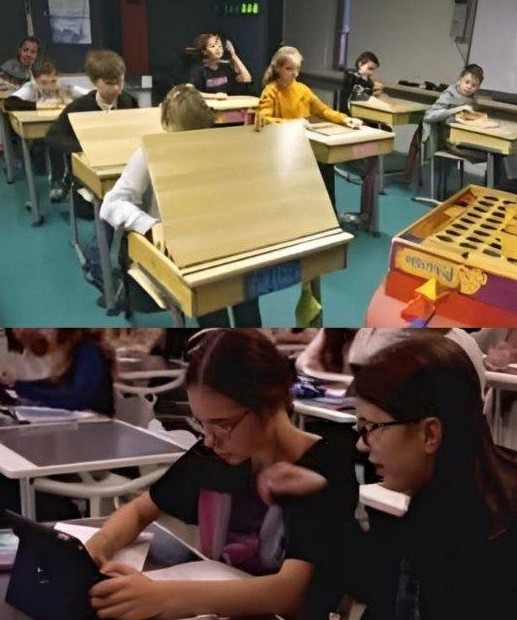
“In Finland, a child walked into school with worn-out shoes and no lunch money—and nobody noticed, because every child gets the same regardless of what their parents earn. No lunch money needed. No textbook fees. No “voluntary” donations that aren’t really voluntary. Every child—from the CEO’s daughter to the immigrant’s son—sits down to the same free meal, opens the same free textbooks, and gets the same education. No exceptions. No shortcuts for the wealthy. No disadvantages for the poor. This is what it looks like when a country decides that education isn’t a commodity—it’s a right. The lunch that changed everything
Post-war Finland. The country was poor, still recovering from fighting the Soviet Union, paying war reparations, resettling displaced people.
But they made a decision: every child would receive a free, hot, nutritious meal at school every single day. Not means-tested. Not only for poor children. Every child. Today, over 70 years later, Finland still provides free school lunches to every student from pre-school through upper secondary school. Not a sandwich in a bag—a proper, hot meal that meets strict nutritional standards set by the National Nutrition Council. Vegetarian? Accommodated. Gluten-free? Provided. Lactose-intolerant? No problem. Religious dietary requirements? Respected. At 11:30 AM in schools across Finland, children line up—rich and poor, immigrant and native-born, high achievers and struggling students—and everyone gets the same meal. No child sits hungry while classmates eat. No child brings a packed lunch because their family can’t afford the cafeteria. No parent decides between paying for school lunch or paying rent. The playing field isn’t just level. It’s identical. Everything is free. Actually free. But it doesn’t stop with lunch. In Finland, education from age 6 through university is completely free: Textbooks? Free. Provided by the school. Notebooks, pens, supplies? Free. Given to every student. Health services? Free. Every school has a nurse. Regular check-ups, dental care, vision screening—all provided at school. Psychological and social support? Free. School psychologists and social workers available to every child. Transportation? Free for students living more than 5km from school. Special education? Free. Finland has some of the best special education support in the world, fully integrated and fully funded. After-school programs? Heavily subsidized or free. Field trips? Generally free for basic educational excursions. Some schools ask for voluntary contributions for expensive multi-day trips, but no child is excluded for inability to pay. Parents don’t receive letters asking for donations. There’s no fundraising to buy textbooks. No bake sales to fund the library. No “suggested contribution” that becomes social pressure. The entire system is funded through taxes—high taxes, yes, but taxes that ensure every child gets exactly what they need to learn, regardless of their parents’ bank account. The philosophy Finland didn’t do this because they’re wealthy. They did it while rebuilding from war. They did it because of a simple idea: investing in children is investing in the country’s future. Not investing in some children. Not investing in children whose parents can pay. ALL children. Because you never know which child will become the engineer who solves your energy crisis, the doctor who cures a disease, the teacher who inspires the next generation, the entrepreneur who creates jobs. And if that potential child comes from a poor family—if poverty prevents them from learning, from eating properly, from accessing books—then society loses their contribution. Finland decided that was unacceptable. The results So does it work? Finland consistently ranks among the top education systems in the world on PISA tests (Programme for International Student Assessment). But more importantly:
Finland has the smallest achievement gap between wealthy and poor students of any OECD country. The child of a janitor performs almost as well as the child of a doctor.
Finnish teachers are highly respected professionals. Teaching requires a master’s degree. Teachers are trusted to design curriculum and assess students without standardized tests dominating learning.
Students spend less time in school than most countries (typically 9 AM – 2 PM for younger students) but learn more efficiently.
There’s almost no private school system because public schools are so good that even wealthy families use them.
Homework is minimal in early grades, allowing children to be children.
Standardized testing is rare. Finland doesn’t test students constantly—they trust teachers to assess learning.
Students are happy. Finnish children report high life satisfaction and low stress compared to peers in other developed countries.
The system works precisely because it’s universal, well-funded, and removes the stress of competition for basic resources. What about the cost? “But Finland has high taxes! “Yes. Finland’s top income tax rate is around 50%. VAT (sales tax) is 24%.But consider what Finns don’t pay for:
Healthcare (universal, mostly free)
Education (completely free through university)
Childcare (heavily subsidized)
Parental leave (generous, paid)
Unemployment benefits (robust safety net)
Pension (strong public system)
Finnish families aren’t paying for private school tuition ($10,000-$50,000/year in many countries). They’re not saving for college tuition ($100,000+ in the US). They’re not buying school supplies every August. They’re not doing fundraisers. They pay more in taxes and receive more in services. It’s not that Finns pay more overall—it’s that they pay collectively through taxes rather than individually through fees, and the collective system is more efficient and equitable. The lesson Finland isn’t perfect. No country is. But they’ve proven something important: when you remove money as a barrier to education, children learn better. When a child isn’t hungry, they can focus on math instead of lunch. When a child has the same textbooks as everyone else, they don’t feel left behind. When a child knows the school nurse will help them without their parents receiving a bill, they actually go when they’re sick. When a child’s learning disability is identified and supported early, they don’t fall through the cracks. When education is truly equal, society becomes more equal. What we can learn You don’t have to be Finland to embrace these principles:1. Universal programs work better than means-tested ones.
When everyone receives a service, there’s no stigma. When only poor children get free lunch, it marks them as different.2. Investing early saves money later.
A well-fed, healthy, educated child becomes a productive adult who contributes to society. A child who falls behind becomes an adult who needs more support.3. Equality of opportunity requires equality of resources.
You can’t tell a child “work hard and succeed” if they’re hungry, don’t have textbooks, and can’t afford school supplies.4. Teachers matter more than tests.
Finland trusts teachers as professionals. They don’t micromanage with constant standardized testing.5. Childhood should include time to be a child.
Shorter school days, less homework, more play—Finnish children are healthier and happier. The bigger pictureIn Finland, education isn’t just free—it’s truly equal. The child of a CEO and the child of a cleaner sit in the same classroom, eat the same lunch, read the same books, and receive the same support. Because Finland decided that every child deserves the chance to reach their potential. Not every privileged child. Every child. That’s not socialism or capitalism. That’s not right-wing or left-wing. That’s just deciding that children matter. All of them. And maybe—just maybe—that’s what it looks like when a country actually means it when they say “we value education. “Not with words. With free lunch.”