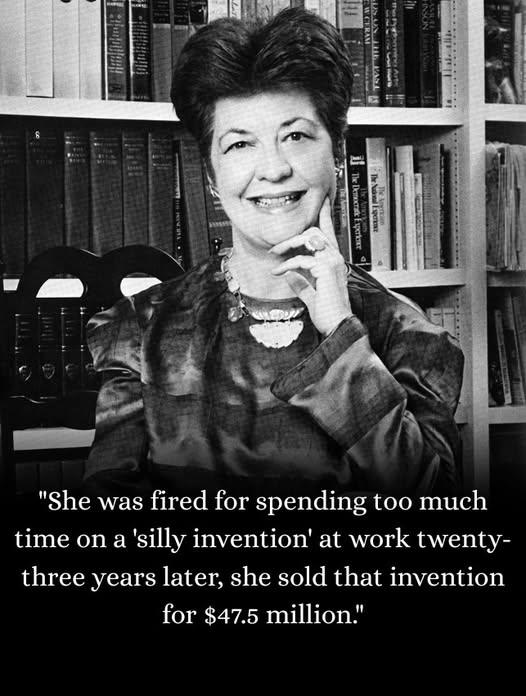
Dallas, Texas.
Bette Nesmith Graham was a single mother working as an executive secretary at Texas Bank & Trust, trying to support her young son on a secretary’s salary.She was struggling.Not just financially—though that was constant—but with something that seemed impossibly small: typing mistakes.Every error meant starting the entire page over. In the era of carbon copies and manual typewriters, one mistake could mean retyping a document multiple times. Hours of work destroyed by a single wrong letter.She watched artists at the bank touch up painted signs when they made mistakes. They didn’t start over—they just painted over the error.So she thought: Why can’t I do that with typing?The kitchen laboratoryBette didn’t have a chemistry degree. She didn’t have money for research. She didn’t have investors or a team.She had a kitchen blender and tempera paint.She mixed paint with other chemicals in her blender at home, testing different formulas night after night. Too thick and it was obvious. Too thin and it didn’t cover the mistake. Wrong color and it didn’t match the paper.She experimented for months.Finally, she created something that worked: a fast-drying, paper-colored fluid that could cover typing mistakes seamlessly.She poured it into small bottles with nail polish brushes attached and brought it to work.Her fellow secretaries noticed. Their pages were suddenly cleaner. Their work faster. Their stress lower.”What is that?” they asked.”Mistake Out,” she said. “I made it.”They wanted bottles of their own.The secret businessBy day, Bette was still a secretary typing letters and answering phones.By night and on weekends, she was manufacturing “Mistake Out” in her kitchen and garage, mixing batches, filling bottles, hand-typing labels.Her son Michael (who would later become famous as a member of The Monkees) helped her fill bottles after school.She started selling them. First to coworkers. Then to other secretaries in Dallas. Then to offices across Texas.Demand grew. Orders increased. But she still had to keep her day job—she needed the steady paycheck.Then in 1956, she made a mistake.She was typing a letter for her boss and accidentally signed it “Bette Nesmith, Mistake Out Company” instead of his name.She was fired.Her boss told her she was spending too much time on her “silly little invention” and not enough on her real job.Bette had lost her steady income. As a single mother, this was terrifying.But she had no choice now.She went all-in on Mistake Out.The business nobody took seriouslyShe incorporated the Mistake Out Company in 1956—later renamed Liquid Paper Corporation.She approached IBM, General Electric, and other major corporations with her product.They dismissed her. A secretary with a kitchen invention? They weren’t interested.Banks wouldn’t loan her money. She was a woman. A single mother. A secretary.She was told repeatedly that her product wasn’t serious, that she should go back to typing.So she built it anyway—slowly, stubbornly, from her garage.She hired other women. She refined the formula. She improved the packaging. She marketed directly to secretaries, the people who actually used typewriters, bypassing the corporate gatekeepers who’d rejected her.By 1968, she was selling one million bottles a year.By 1975, it was 25 million bottles a year.The revolutionary employerAs Liquid Paper grew, Bette Nesmith Graham did something radical for the 1960s:She provided on-site childcare for her employees.This was decades before it became standard practice. At a time when working mothers were still stigmatized, when most companies expected women to choose between career and family, Bette built a company that supported both.She also offered:
Profit-sharing plans
Flexible schedules
A library and employee recreation facilities
Education programs
She ran her company the way she wished the world had treated her when she was a struggling single mother.She created the workplace she’d needed but never had.The saleBy 1979, Liquid Paper was a household name. The correction fluid was in offices, schools, and homes across America and internationally.That year, the Gillette Corporation offered to buy Liquid Paper.The price? $47.5 million, plus royalties.The total value of the deal reached approximately $50 million.The secretary who’d been fired twenty-three years earlier for wasting time on a “silly invention” had just sold that invention for $50 million.She was one of the wealthiest self-made businesswomen in America.The legacyBette Nesmith Graham died in 1980, just six months after selling her company.But she left behind more than a business.She left behind a blueprint for how women could succeed in entrepreneurship despite every obstacle:When gatekeepers say no, sell directly to the people who need your product.When banks won’t loan you money, bootstrap from your kitchen.When you succeed, lift other women up—provide childcare, flexibility, profit-sharing.When you sell, use the money to help others.(She founded two charitable foundations focused on supporting women in business and the arts, and left half her estate to charity.)She proved that you don’t need permission to innovate. You don’t need credentials to solve problems. You don’t need investors to believe in you if you believe in yourself.You just need a problem worth solving and the stubbornness to keep going when everyone tells you to stop.The ironyHere’s what makes Bette Nesmith Graham’s story even more remarkable:Liquid Paper—her multimillion-dollar invention—became obsolete within decades.Word processors and computers made typewriters irrelevant. Correction fluid became unnecessary. By the 2000s, Liquid Paper sales were plummeting.Her invention didn’t last forever.But her impact did.She proved women could invent. Could build companies. Could succeed despite being dismissed by banks, corporations, and society.She showed that a woman working from her kitchen could compete with major corporations—and win.She demonstrated that businesses could support working mothers without sacrificing profitability.And she left a fortune to foundations supporting women in business and the arts—helping other women follow the path she’d carved.The product is gone. The example remains.From secretary to CEOBette Nesmith Graham started as a secretary who couldn’t afford to make mistakes.She ended as a multimillionaire entrepreneur who proved that mistakes can lead to extraordinary opportunities—if you have the courage to solve the problem instead of accepting it.She was fired for spending too much time on a “silly invention.”That invention changed her life. And it changed what women believed they could achieve.Every female entrepreneur who builds a business from her kitchen today walks in Bette Nesmith Graham’s footsteps.Every company that provides childcare honors her vision.Every woman who refuses to accept “no” from gatekeepers follows her example.She mixed paint in a blender in her kitchen.And she built an empire.Bette Nesmith Graham.Secretary. Single mother. Inventor. Millionaire. Trailblazer.The woman who proved that even the smallest frustration—if you’re stubborn enough to solve it—can change the world.